Personal Account
This article introduces the settings available for your HAP personal account, including the profile menu, personal information and security settings, my organizations, preferences, authorization & access, product keys, and more.
Profile Menu
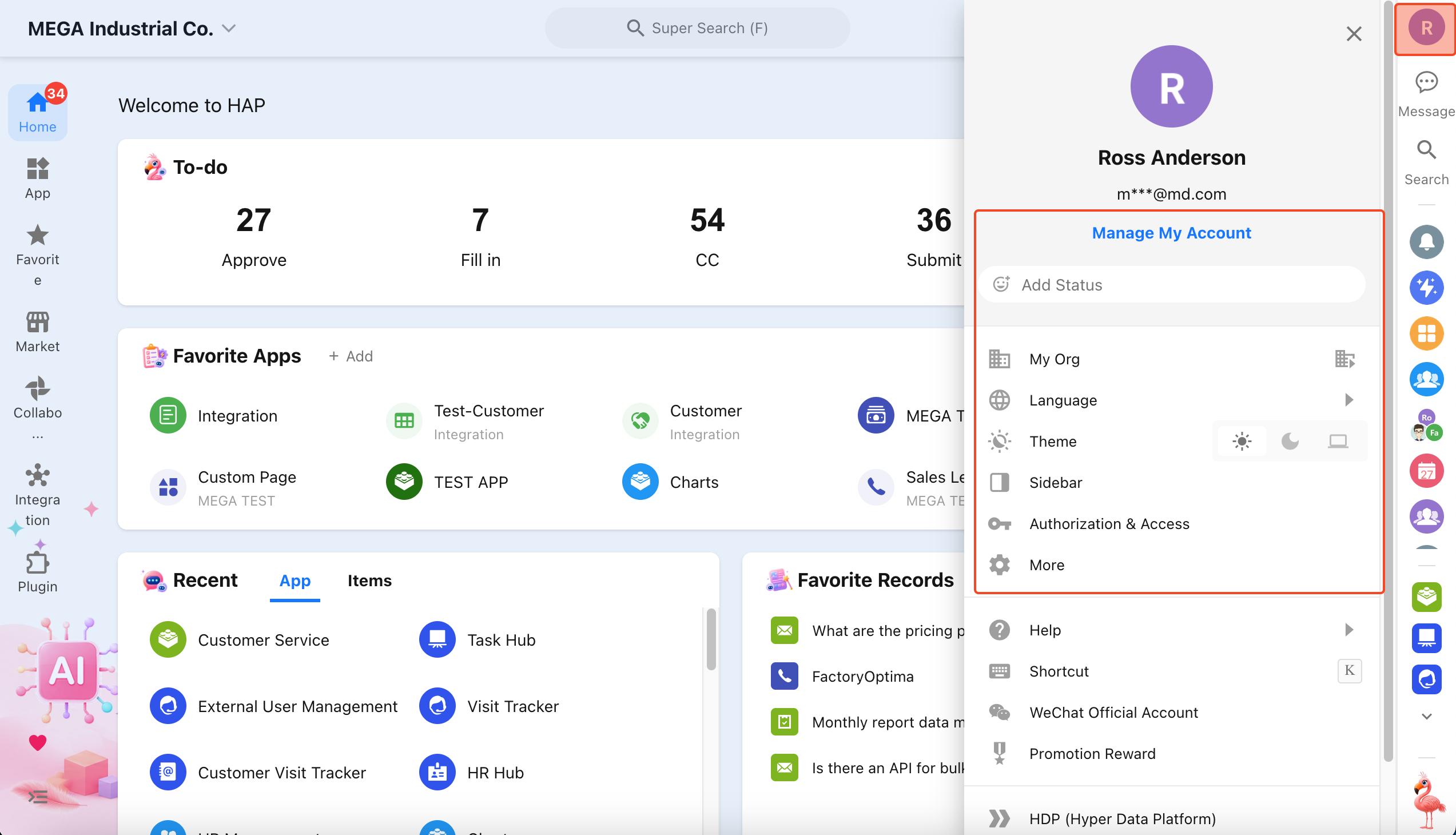
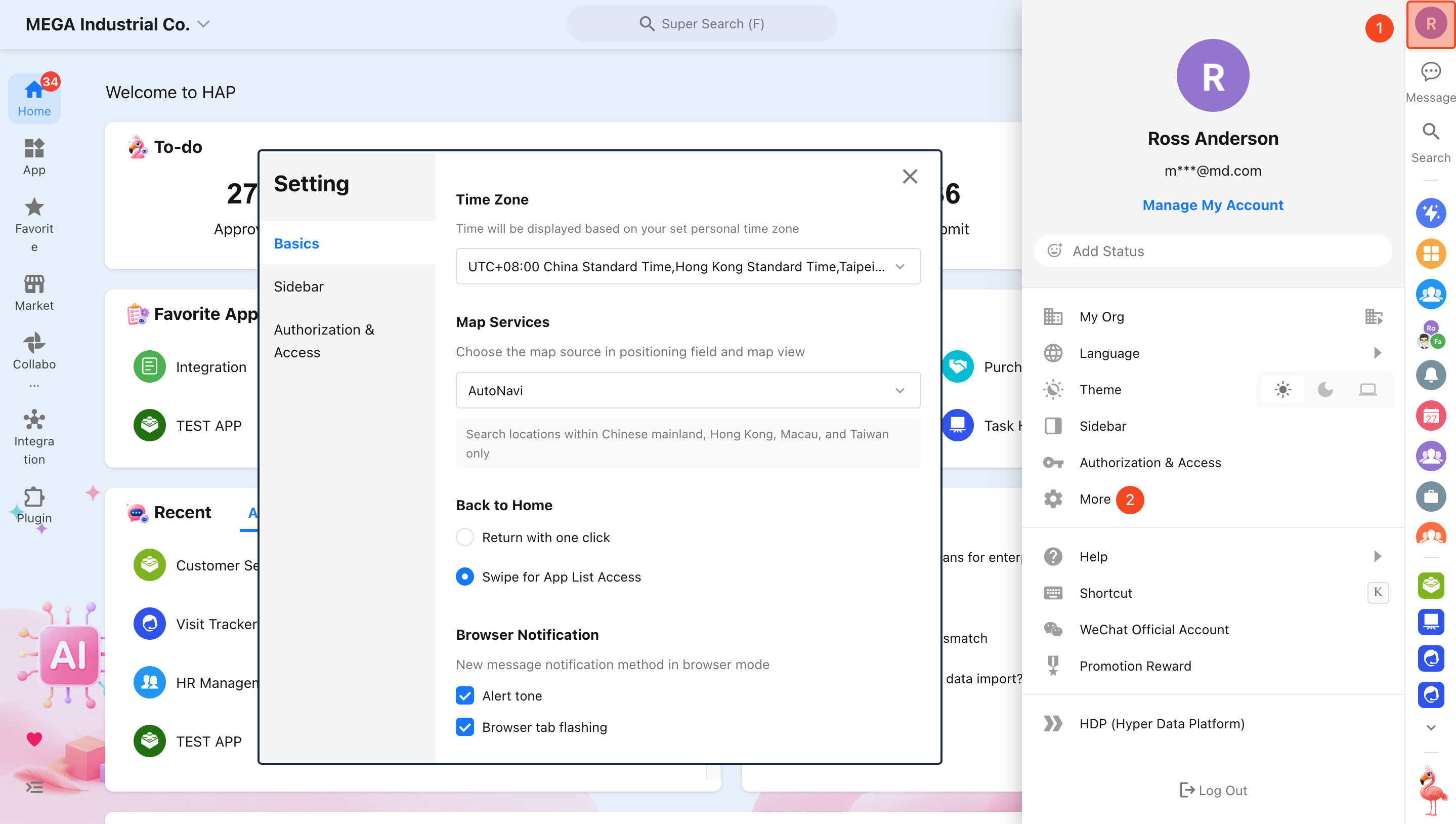
Click your profile picture in the upper-right corner to open the menu and access the following options:
-
Manage My Account: Open your personal account page to manage personal information, privacy, security, and product keys.
-
Add Status: Set a personal status such as On Leave, Sick, or In a Meeting. Your colleagues can see your status in chats, on your profile card, and on your profile page. Learn more about personal status.
-
My Organization: Open the My Organization panel. If you are an organization administrator, an Org Admin button is displayed on the right.
-
Language: Switch the system language.
-
Theme: Switch between dark mode, light mode, or automatically follow your device settings.
-
Sidebar: Customize how tools and shortcuts are displayed in the sidebar.
-
Authorization & Access: Manage personal access tokens and third-party application authorizations.
-
More: Configure preferences such as time zone, map service, notifications, and how to return to the HAP home page.
-
Log Out: Sign out of the current session.
Switch Language
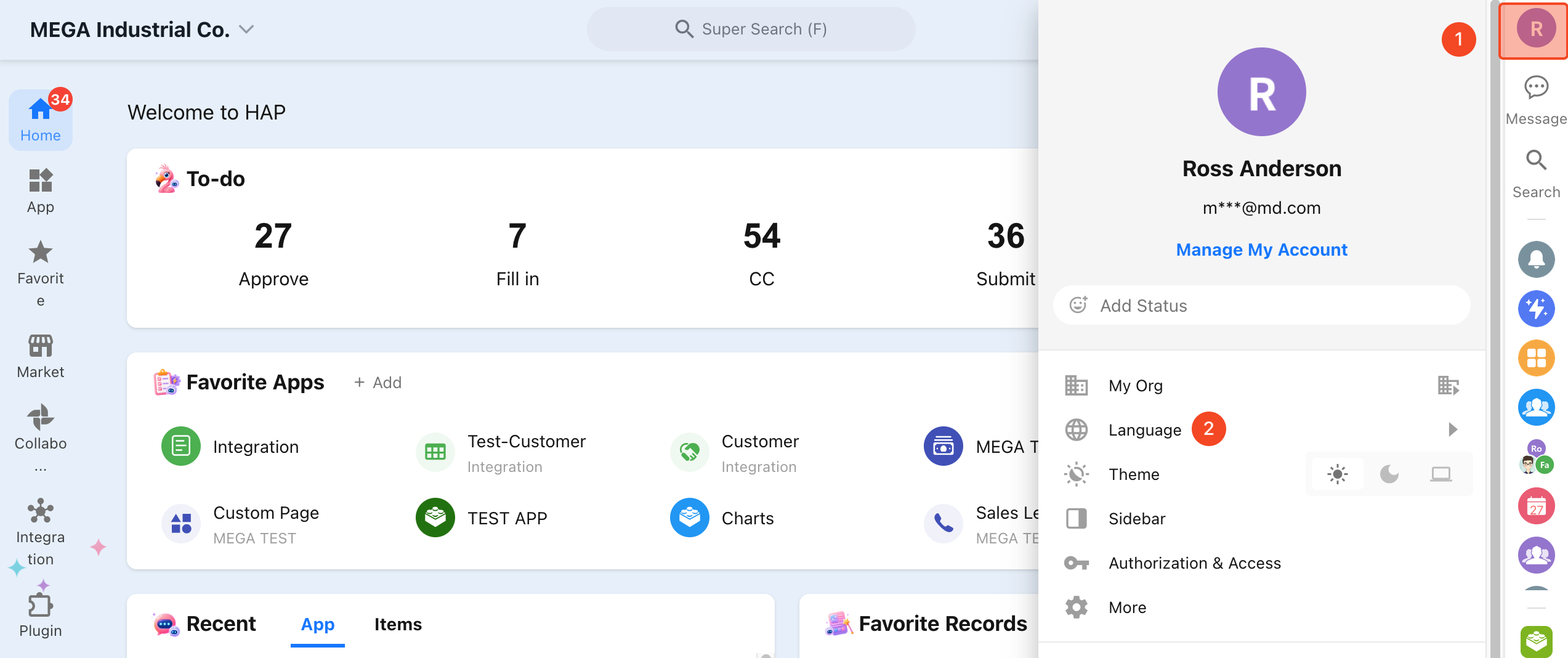
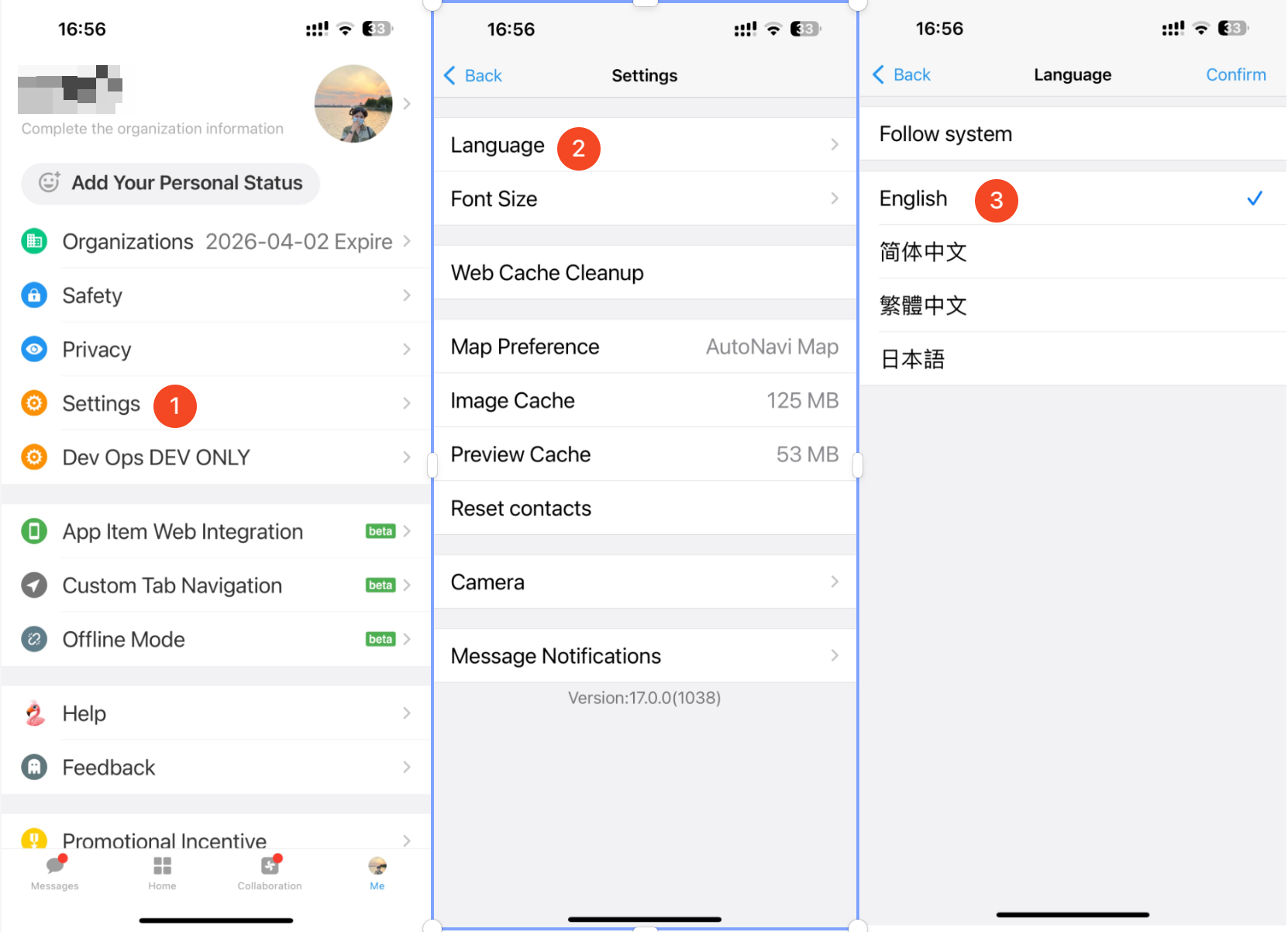
Supported system languages include English, Simplified Chinese, Traditional Chinese, and Japanese.
Path:
-
Web: Profile Picture > Language
-
iOS / Android: Me > Settings > Language
Sidebar
Path: Profile Picture > Sidebar
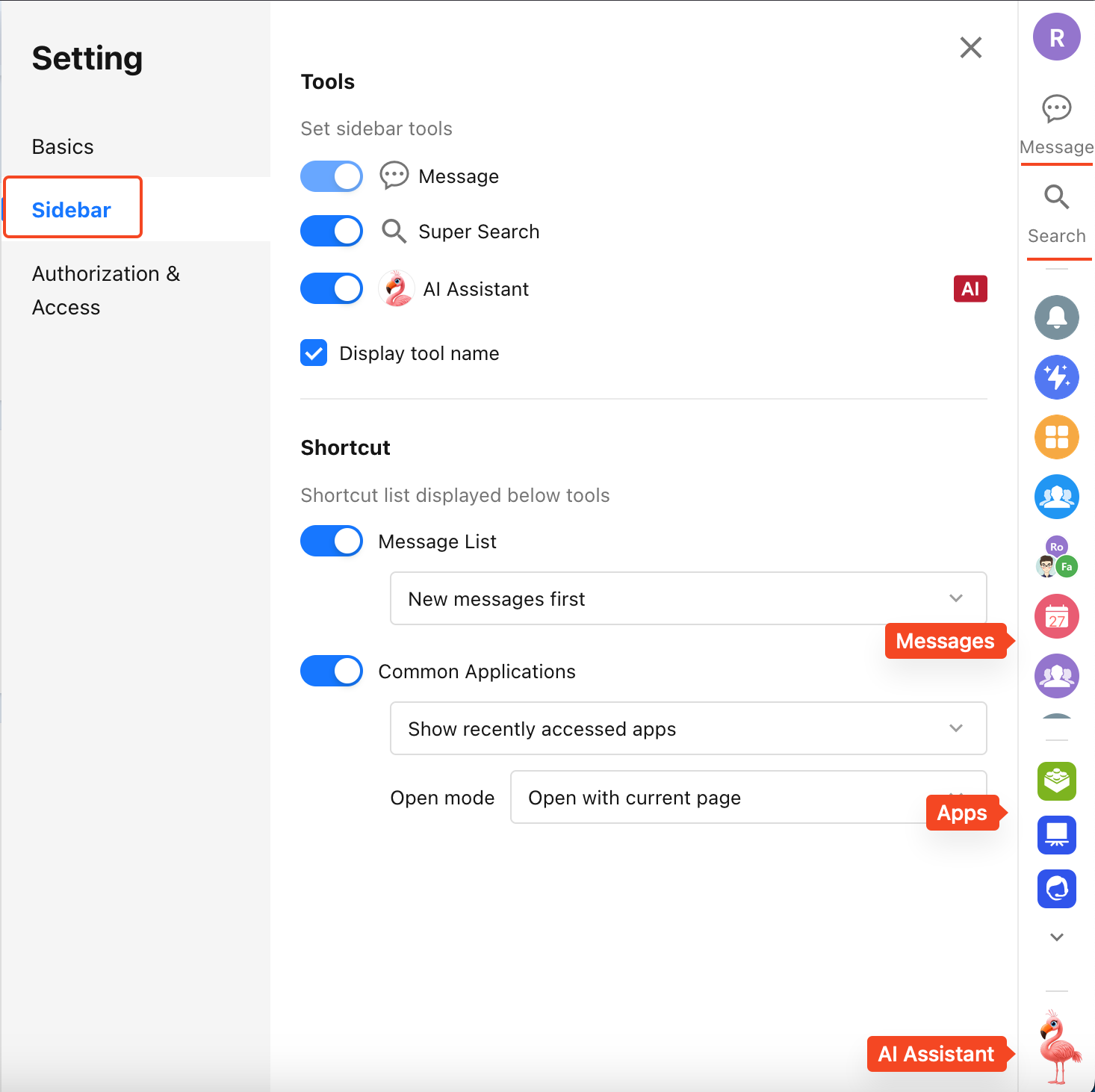
You can customize how tools and frequently used apps are displayed in the right sidebar:
-
Tools: Configure whether Messages, Super Search, and the AI assistant Mingo are displayed in the sidebar. Messages are always displayed and cannot be hidden.
-
Show Tool Names: Choose whether tool names are displayed next to their icons.
-
Message List Order: Choose whether conversations with new messages or pinned conversations are displayed first.
-
Frequently Used Apps: Choose whether the sidebar displays favorite apps or recently used apps, and configure whether apps open in the current page or a new page.
My Account
Access: Click your profile picture and select Manage My Account to open the My Account page.
The left navigation includes four tabs: Profile, Privacy, Security, and Product Key.
Profile
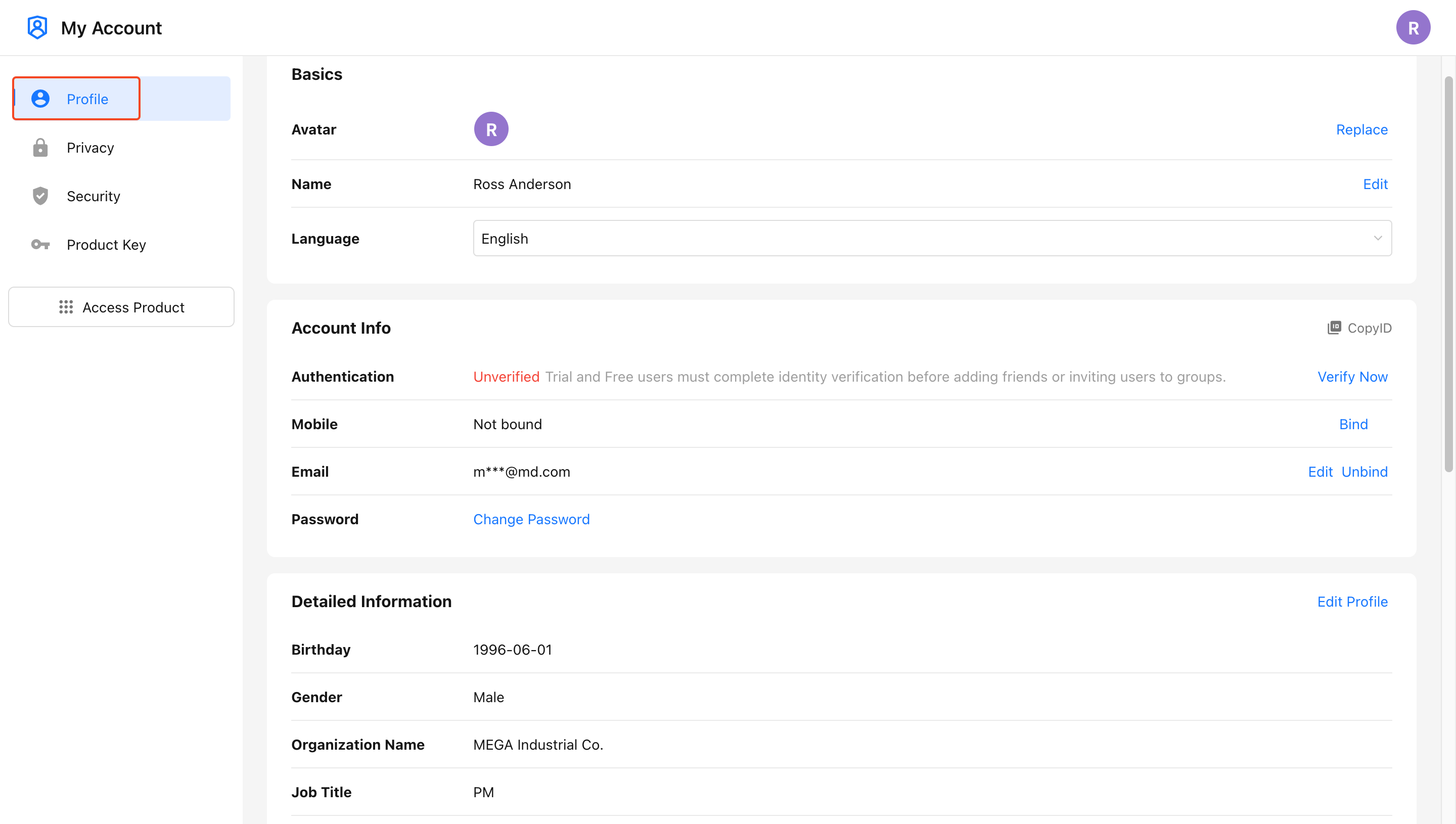
The Profile page includes six sections: basic information, account information,detailed infomation, education, work experience, and account deletion.
-
Change Name and Profile Picture: Click Replace on your profile picture to upload a new image, or click Edit next to your name to update it. Click Edit Profile to enter information such as birthday, gender, organization name, job title, address, WeChat, LinkedIn, and Weibo.
-
Switch Language: Use the language drop-down list to switch between Simplified Chinese, Traditional Chinese, English, and Japanese.
-
Identity Verification: Click Verify Now and complete facial verification on a mobile device. Users who have not completed verification cannot add friends or invite users to groups. Learn more about restricted features.
-
Change Password: Click Change Password to update your password. All currently signed-in devices will be logged out automatically. If you forget your password, click Forgot Password on the sign-in page to reset it.
-
Bind a Phone Number or Email Address: Click Bind to link a phone number or email address, Edit to replace it, or Unbind to remove it. You can unbind one only when both a phone number and email address are linked to the account. If you see a message that the phone number or email address is already in use, see Account Binding and Deletion for details.
-
Bind Third-Party Accounts: HAP supports linking WeChat, QQ, WeCom, Feishu/Lark, and DingTalk accounts. WeChat and QQ accounts are linked by users themselves, while WeCom, Feishu/Lark, and DingTalk accounts are linked by organization administrators.
-
Education and Work Experience: Click Add to enter your education and work history. This information is visible only to you.
-
Delete Account: Click Delete at the bottom of the page. You must leave all organizations before deleting your account. See Account Binding and Deletion for details.
The organization and job title entered in the profile details section are considered Personal Information and may be displayed on profile cards, @mention user lists, and other areas. This is different from the Organization Information configured by organization administrators in the organization management console. Learn more.
Privacy
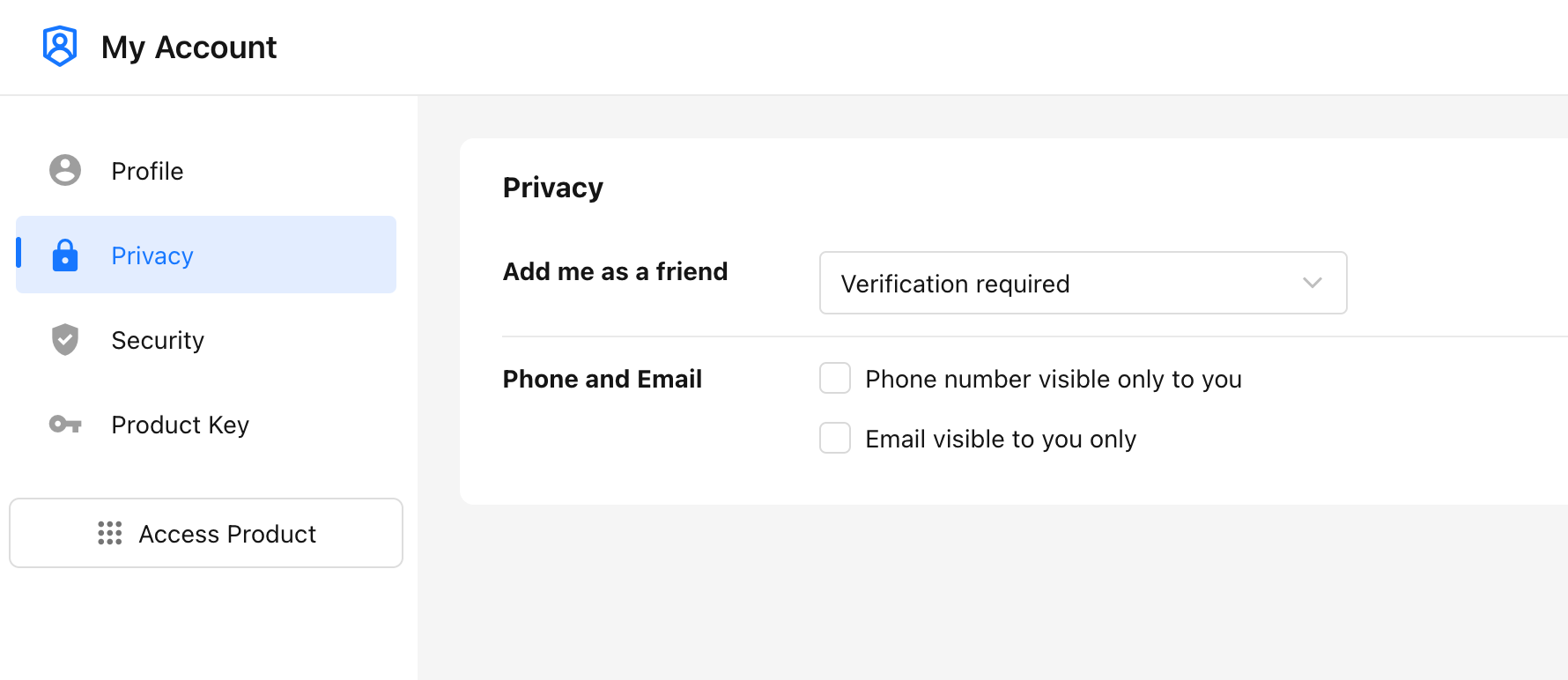
In the Privacy tab, you can control who can view or access your personal information:
-
Add Me as a Friend: Configure whether verification is required when other users add you as a friend. Available options include Verification Required, Allow Anyone, and Do Not Allow Anyone.
-
Phone Number Visible Only to You: When enabled, other users cannot view your phone number.
-
Email Visible Only to You: When enabled, other users cannot view your email address.
If your phone number or email address is set to visible only to you, other users cannot view it in Contacts, your profile cards, or other areas. Organization administrators can still view this information in member management.
Security
In the Security tab, you can configure two-factor authentication, login notifications, and single-device login, and view or manage currently signed-in devices.
After enabling WeChat Service Account Notification, HAP sends a WeChat notification each time your account signs in successfully, helping you quickly identify unauthorized sign-ins.
Two-Factor Authentication (2FA)
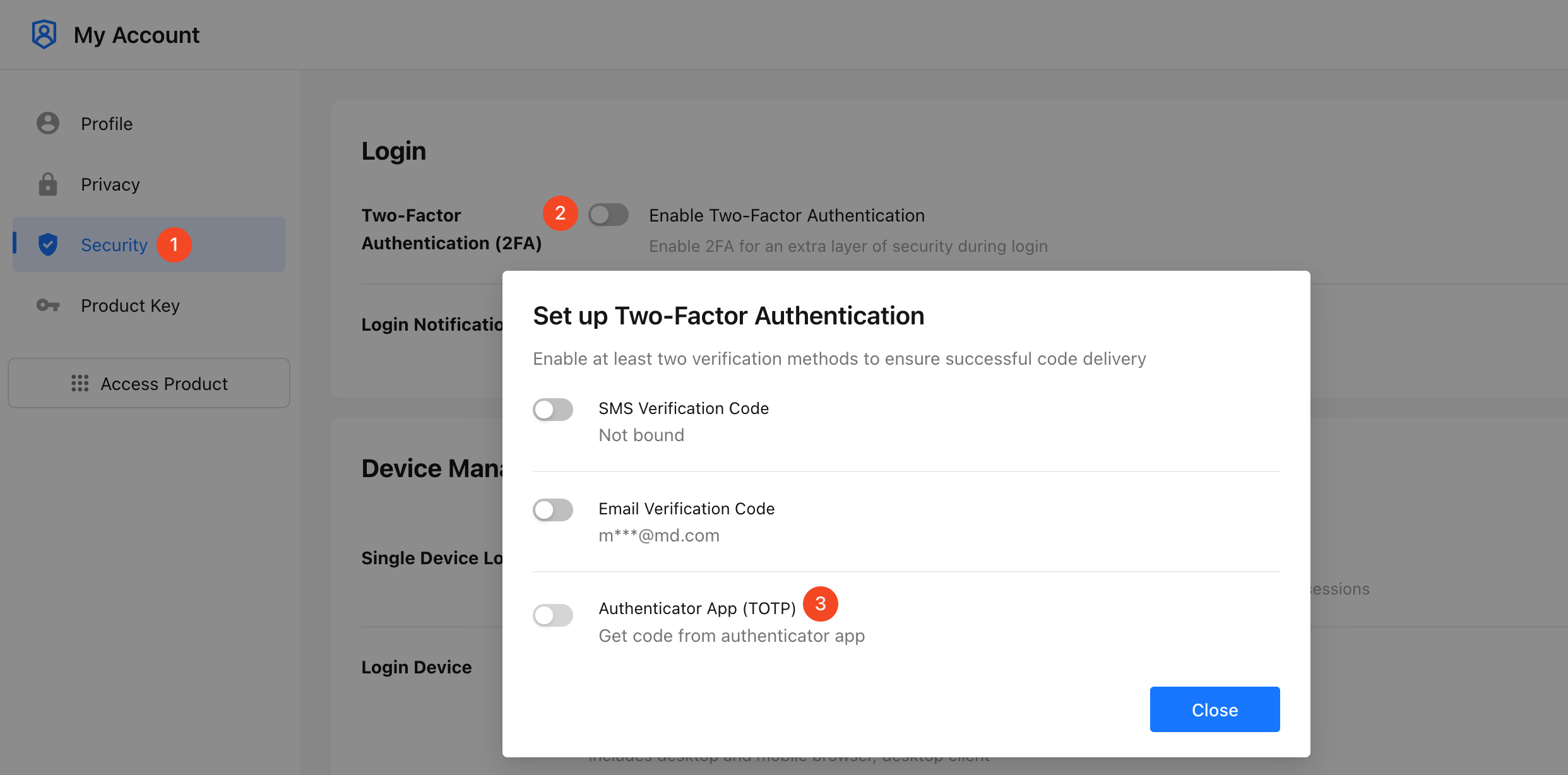
Two-factor authentication adds an extra layer of identity verification in addition to your account password. Once enabled, you must enter a verification code when signing in with your password.
Verification codes can be received through:
- SMS
- Authenticator App (TOTP)
To reduce the risk of being unable to receive a verification code, we recommend enabling at least two verification methods.
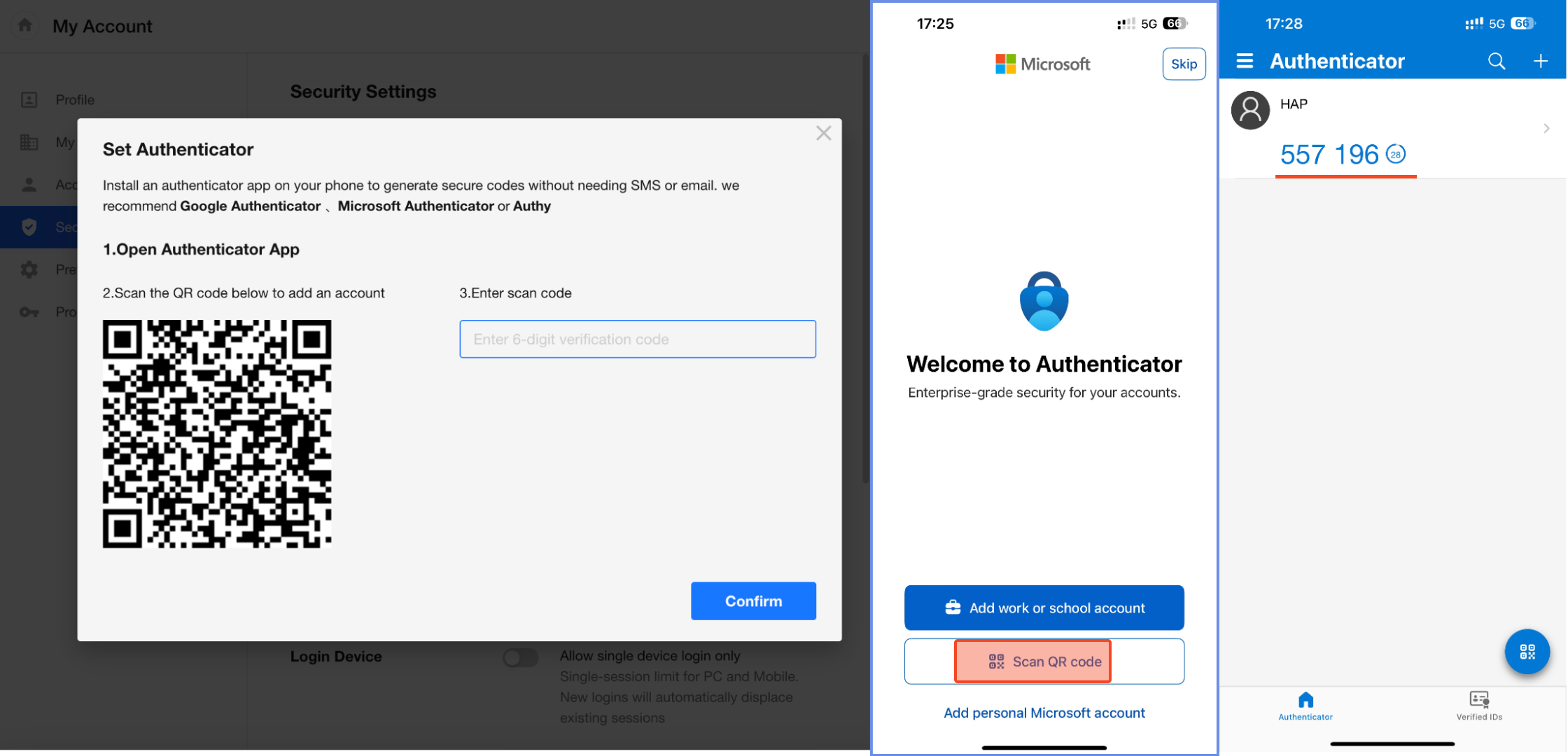
Configure an Authenticator App (TOTP):
-
Install Google Authenticator, Microsoft Authenticator, or Authy.
-
In the authenticator app, scan the QR code displayed in HAP to add your account.
-
Enter the 6-digit verification code generated by the authenticator app in HAP, then click Confirm to complete the setup.
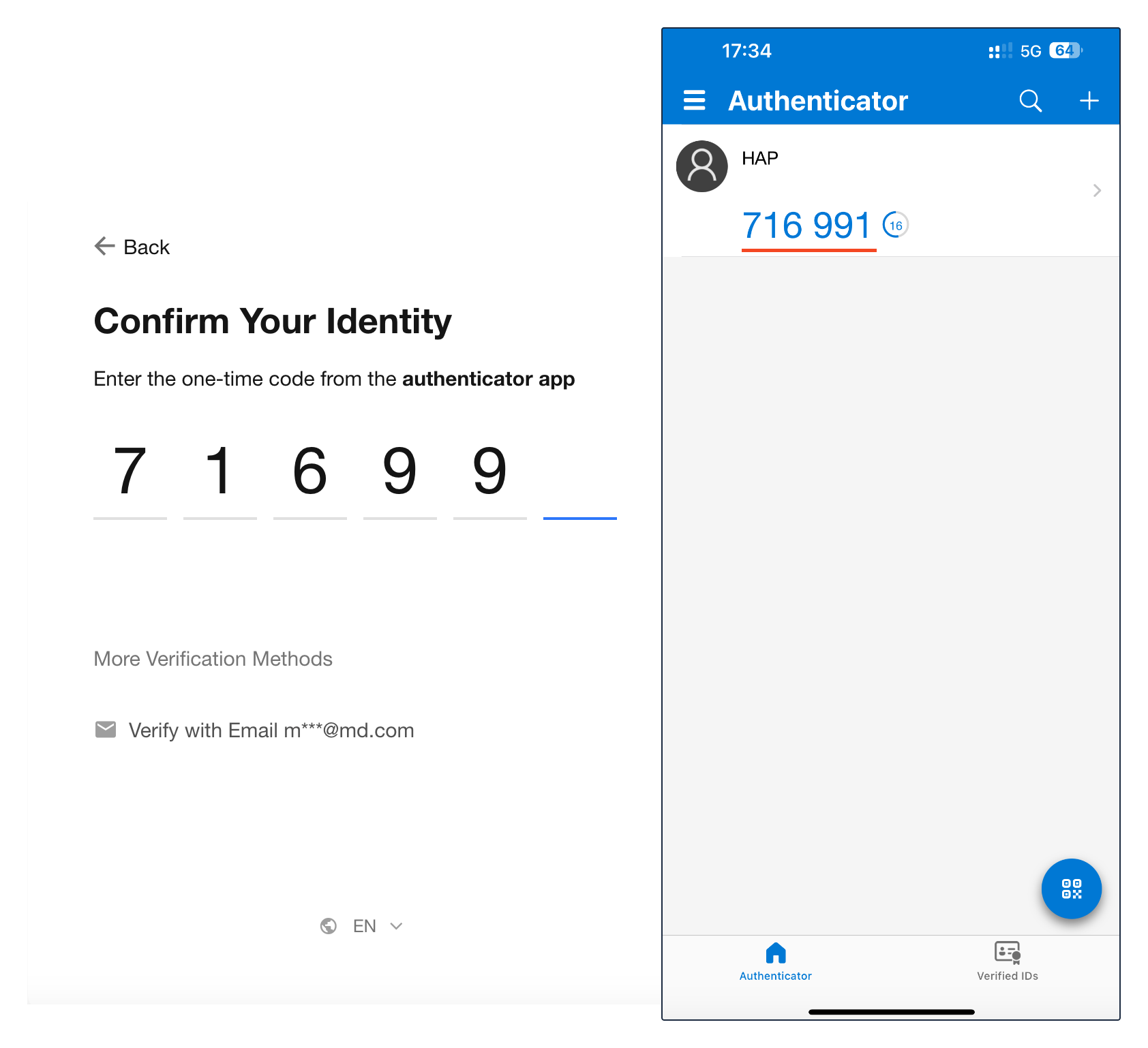
If you disable TOTP and enable it again later, you need to scan the QR code again to add the account.
Device Management
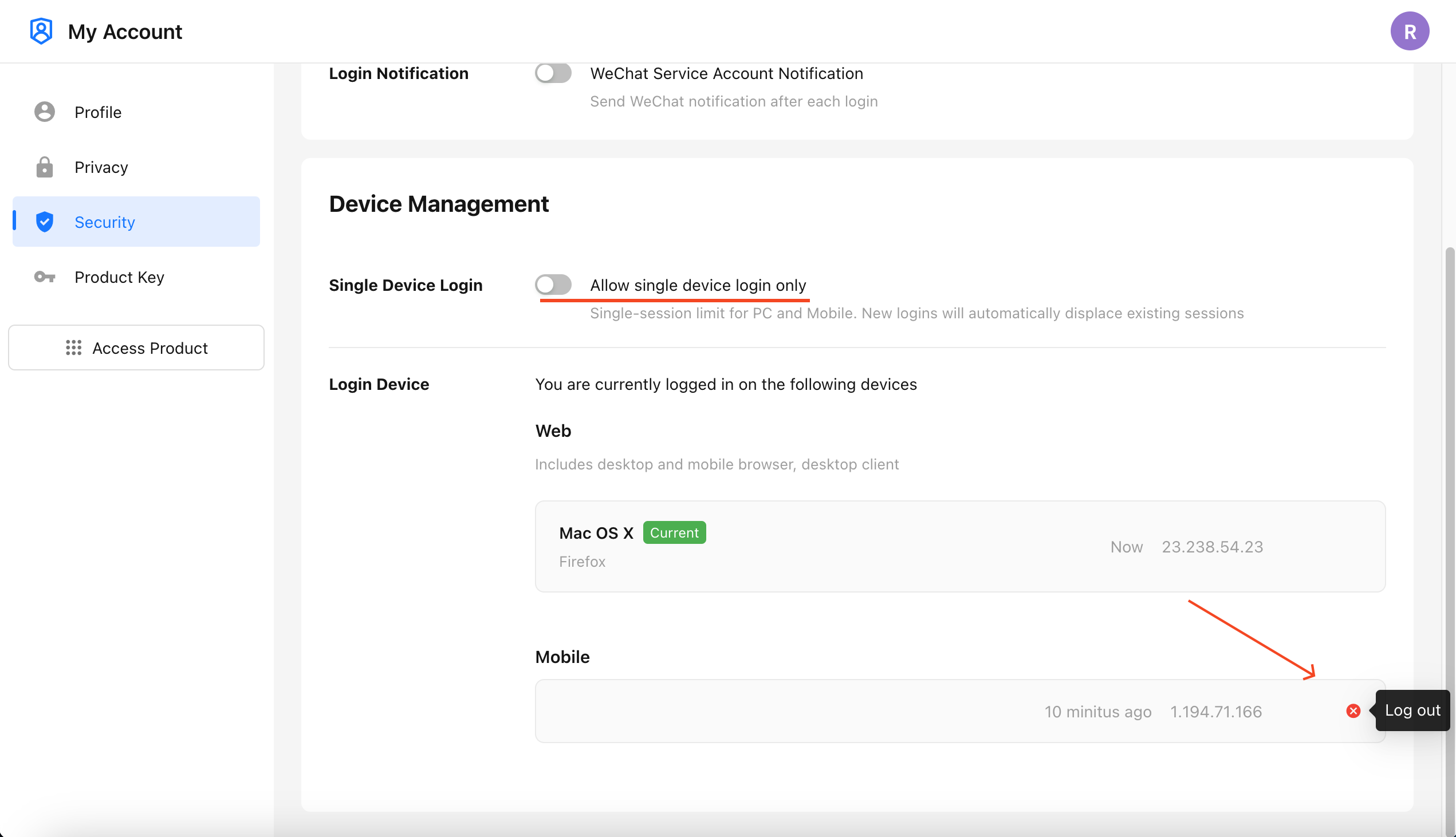
Single-Device Login
After enabling Allow Only One Device Login, only one device can remain signed in for each device type: web and mobile.
When the account signs in on a new device of the same type, the previous device is automatically logged out.
Device types are grouped as follows:
-
Web: PC browsers, mobile browsers (HAP pages opened inside WeCom, DingTalk, Feishu, or mini programs), and desktop clients.
-
Mobile App: iOS and Android apps.
Push notifications are sent only to the most recently logged-in mobile device.
Login Device
-
View all devices currently signed in to your account, including the operating system, browser or client, and most recent activity time.
-
The device you are currently using is marked as Current.
-
For devices you no longer use or do not recognize, click Log Out on the right to sign out that device.
Product Key
View license information for HAP Server, with support for switching between HAP and HDP. Information includes the Server ID, edition, start date, and expiration date.
Product keys are available only to HAP Server customers. HAP SaaS users will see No Product Key on this page.
How to Get a User ID
Each user has a unique User ID. It is mainly used to match users during member imports, update member information in bulk, and identify accounts when contacting HAP Support.
You can get User IDs in the following ways:
-
Get a single User ID: Open Contacts (shortcut: E) and search for the user, or locate the user by department, then copy the User ID from the profile panel. You can also click the user's profile picture in a message conversation and copy User ID from the profile card.
-
Get User IDs in bulk: Organization administrators can go to Org Admin > User & Department and export the member list.
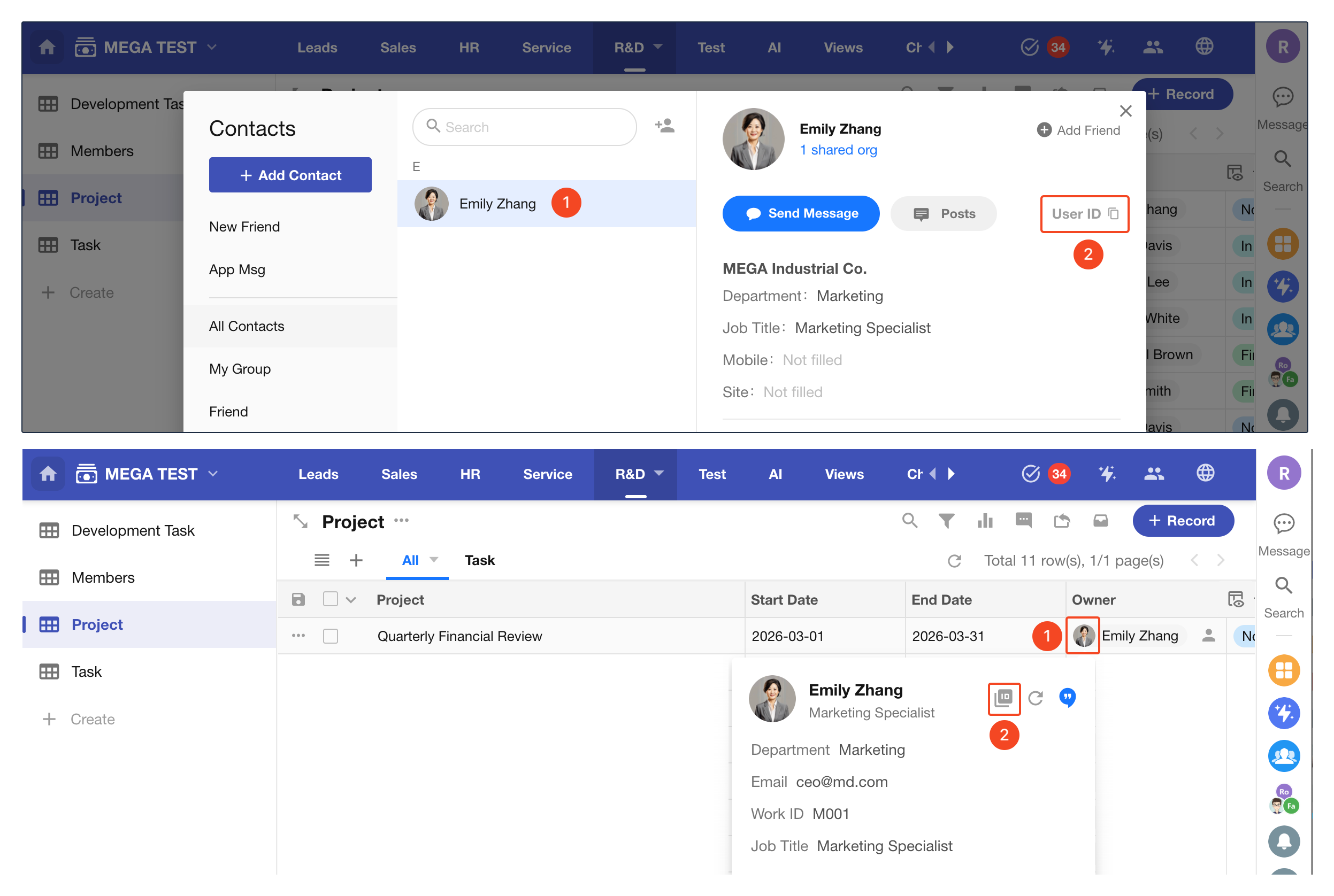
My Organization
Access: Click your profile picture and select My Org to open the My Organization panel.
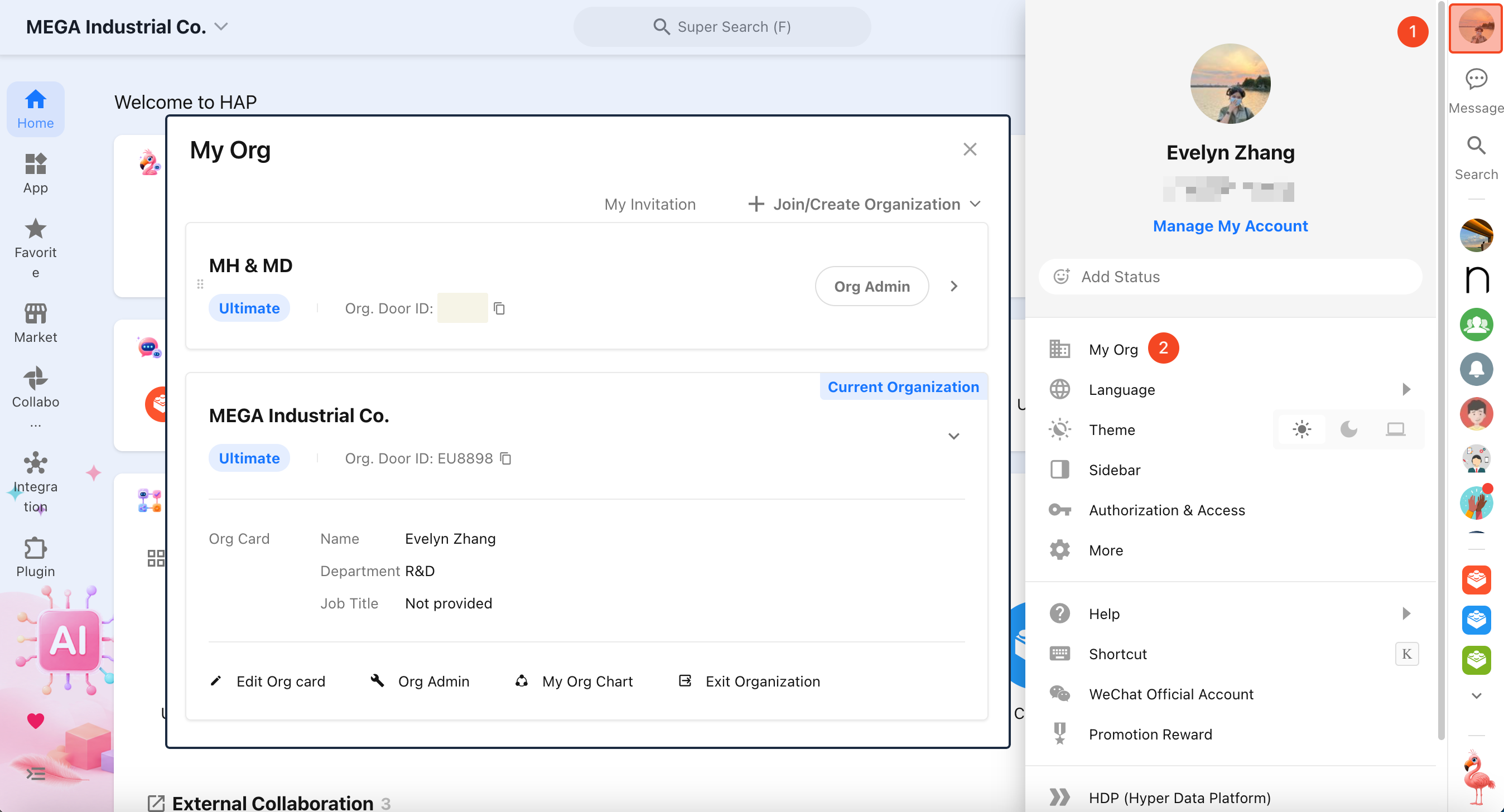
The top of the panel includes two tabs:
-
My Invitation: View organization invitations.
-
Join/Create Organization: Join an organization using its organization Door ID or create a new organization.
All organizations you have joined are listed below. The organization you are currently using is marked as Current Organization.
Each organization card displays:
-
Organization name, edition (such as Free or Ultimate), and organization Door ID.
-
Organization profile card, including your name, department, and job title.
-
Edit Org Card: Update your profile information for that organization.
-
Org Admin: Open the organization management console.
-
My Org Chart: View and manage your reporting relationships.
-
Exit Organization: Leave the organization.
Closed organizations are collapsed at the bottom by default. Click Closed to expand and view them.
Organization Order: When you belong to multiple organizations, newly joined organizations are displayed at the top by default. You can drag and drop organizations to reorder them. The same order is applied wherever organization lists are displayed, including organization switching on the home page and organization members in Contacts.
Preferences
From the profile menu, go to More > Basics to configure your personal time zone, map service, browser notifications, and how to return to the HAP home page from an app.
Personal Time Zone
Set the time zone used for your account. Date fields and system fields in worksheets are displayed and calculated based on this time zone.
By default, HAP follows your device time zone. Learn more.
Map Service
Positioning fields in worksheets allow users to select locations from a map. You can choose between Amap and Google Maps.
-
Amap: Supports searching for locations by name and covers Mainland China, Hong Kong, Macau, and Taiwan.
-
Google Maps: Provides global map coverage. Searching for locations by name is currently not supported.
Browser Notifications for New Messages
Configure how you are notified when new messages arrive in a browser or desktop client.
Available options include:
- Alert tone
- Browser Tab Flashing
If you receive a large number of messages, you can disable either notification sound or browser tab flashing.
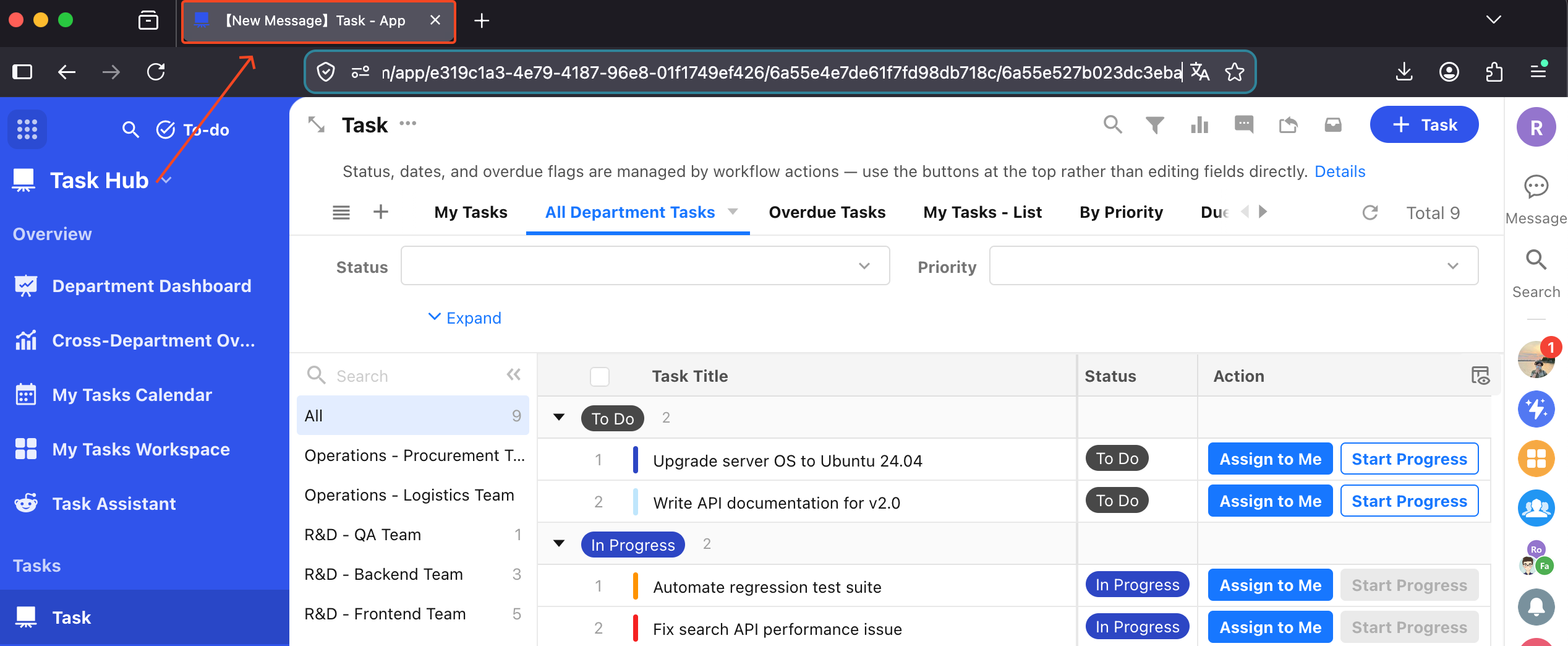
Return to Home from an App
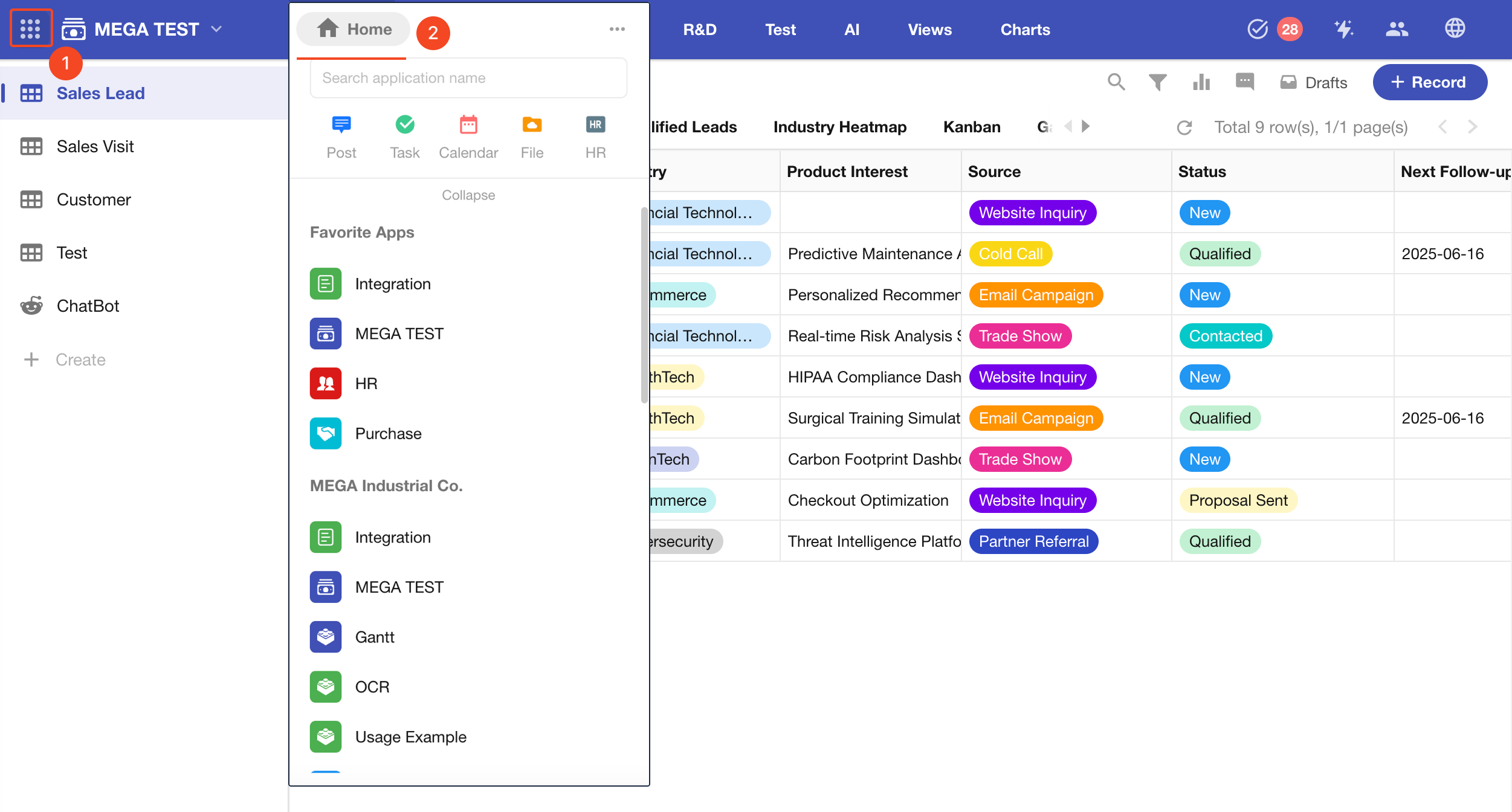
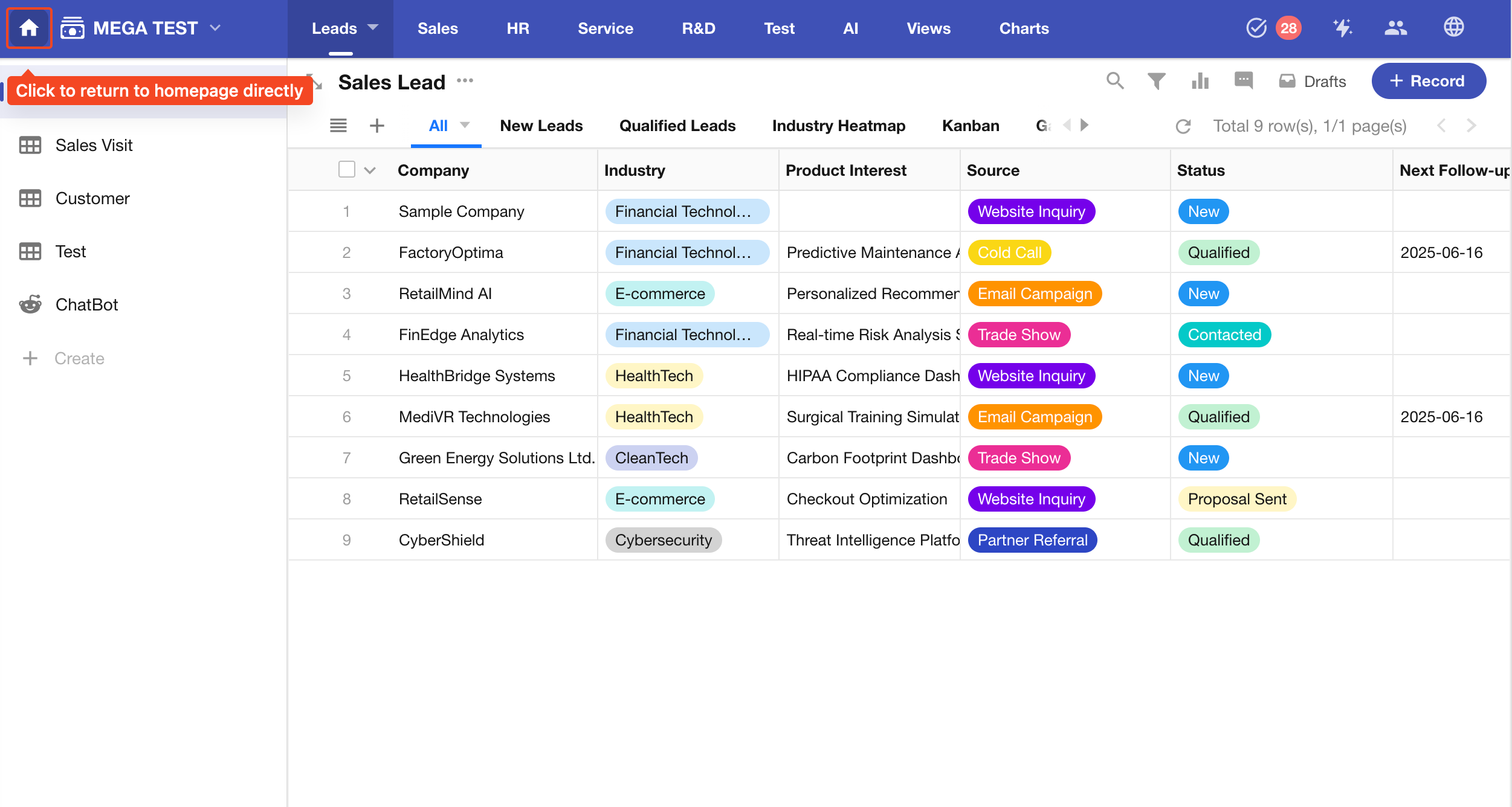
Configure what happens when you click the button in the upper-left corner after entering an app:
-
Swipe for app list access: Hover over the button to display your favorite apps in a slide-out panel. Click the Home button to return to the HAP home page.
-
Return with one click: Click the button to return directly to the HAP home page.
Authorization & Access
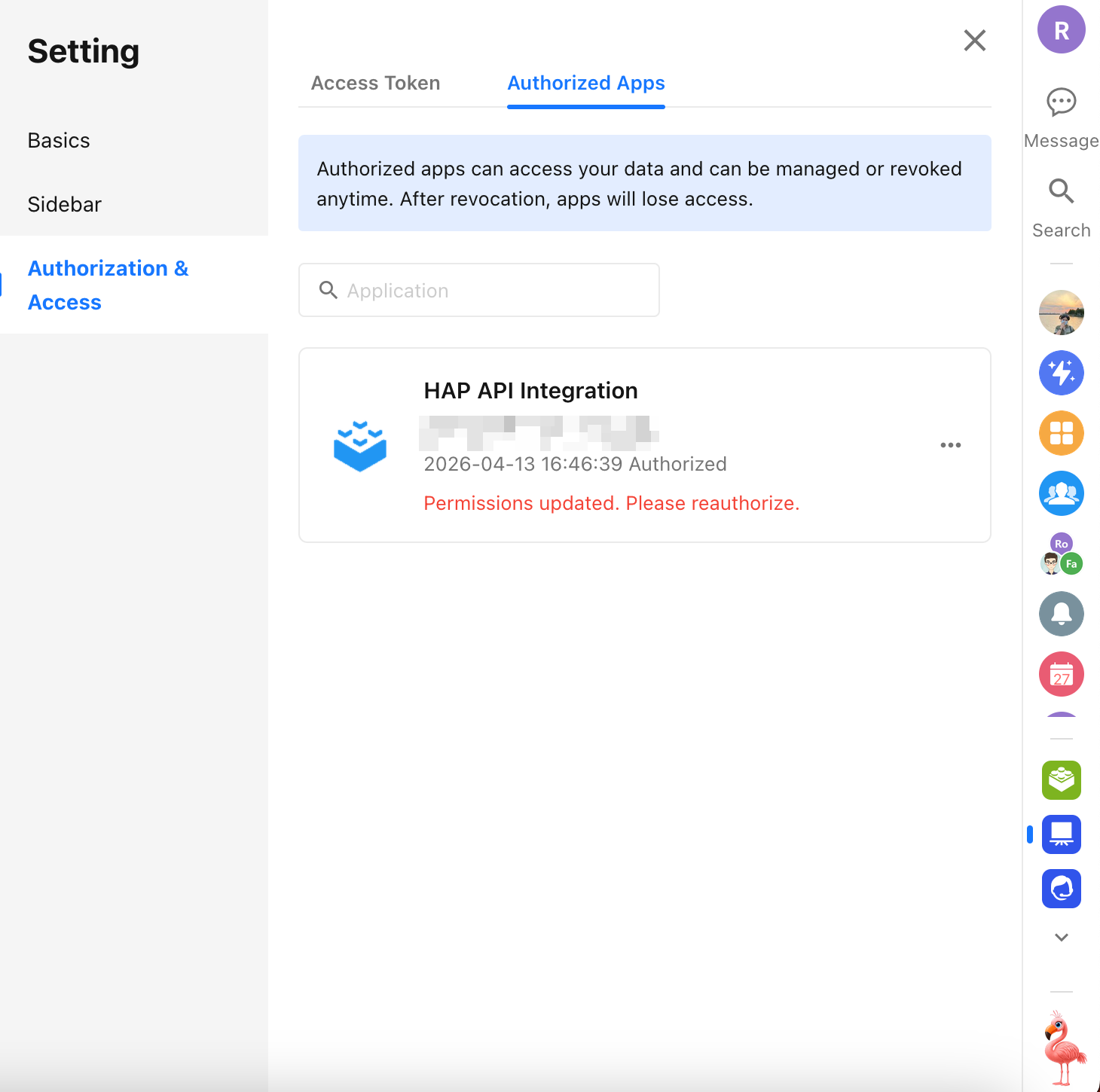
Open Authorization & Access from the profile menu to manage personal access tokens and third-party application authorizations:
-
Personal Access Token (PAT): Represents your identity and can be used to call HAP APIs. When creating a token, you can define its permissions and data access scope. Personal access tokens carry your account permissions, so do not share them with others.
For details on creating and using personal access tokens, see Access Credentials.
-
Authorized Third-Party Applications: View and manage third-party applications you have authorized.
For each authorized application, you can revoke access or view its permission list.
Was this document helpful?