Node - Delay
The Delay node pauses a workflow after the previous node has run and resumes it at a specified date and time or after a specified duration.
For example, a workflow can be configured to resume at 8:00 AM on October 1, 2026, or one day after it reaches the Delay node.
Use Cases
- Resume on a specific date: An order record contains an expected shipping date. The workflow pauses until that date and then notifies the fulfillment team to prepare the order.
- Resume after a specified duration: When a lead's status changes to Not Contacted, trigger a workflow, wait one day, and then notify the assigned sales representative to follow up again.
Example 1: Resume on a Specific Date
Create a Workflow
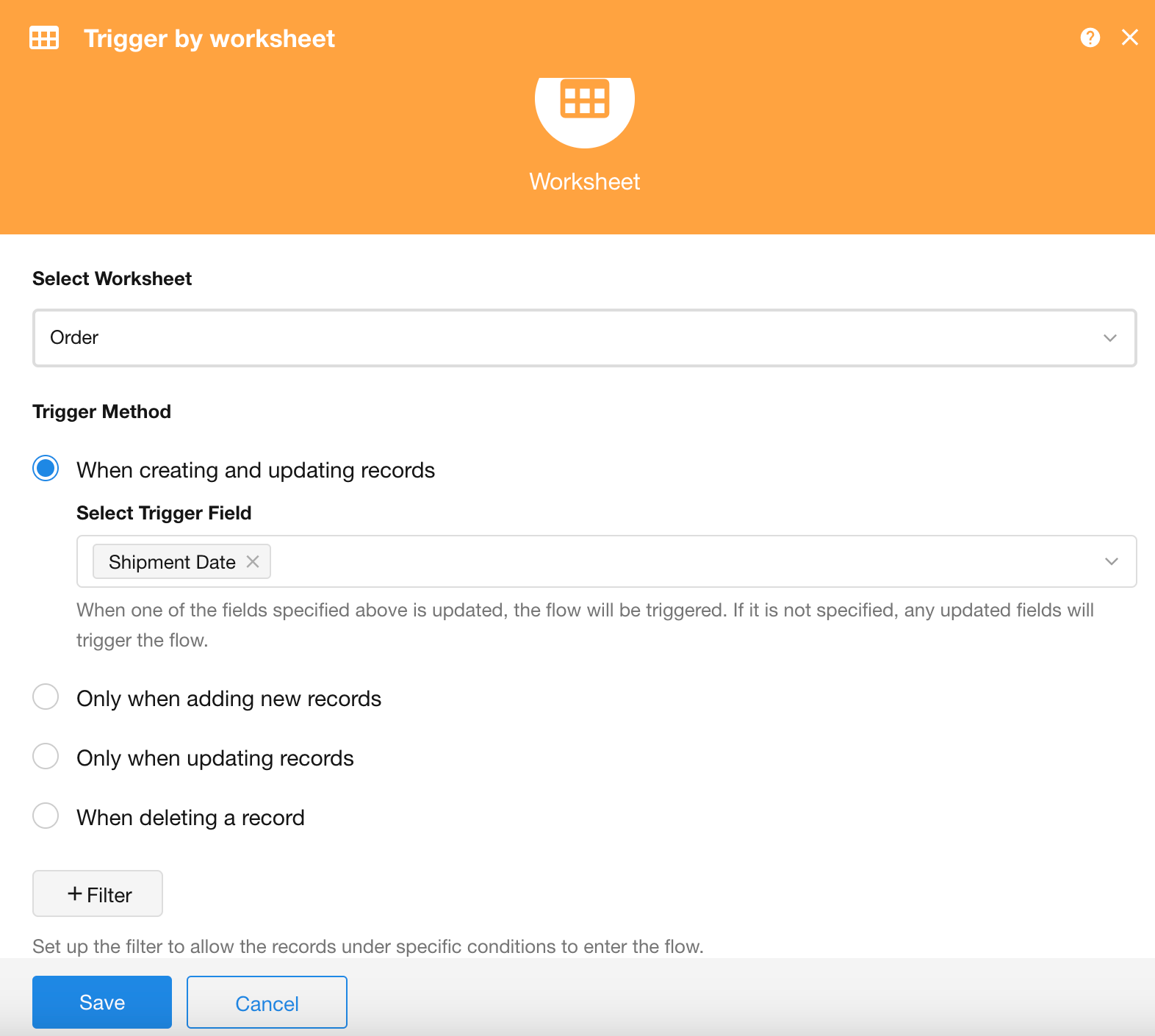
Configure the workflow to trigger when the shipping date is entered.
Add a Delay Node
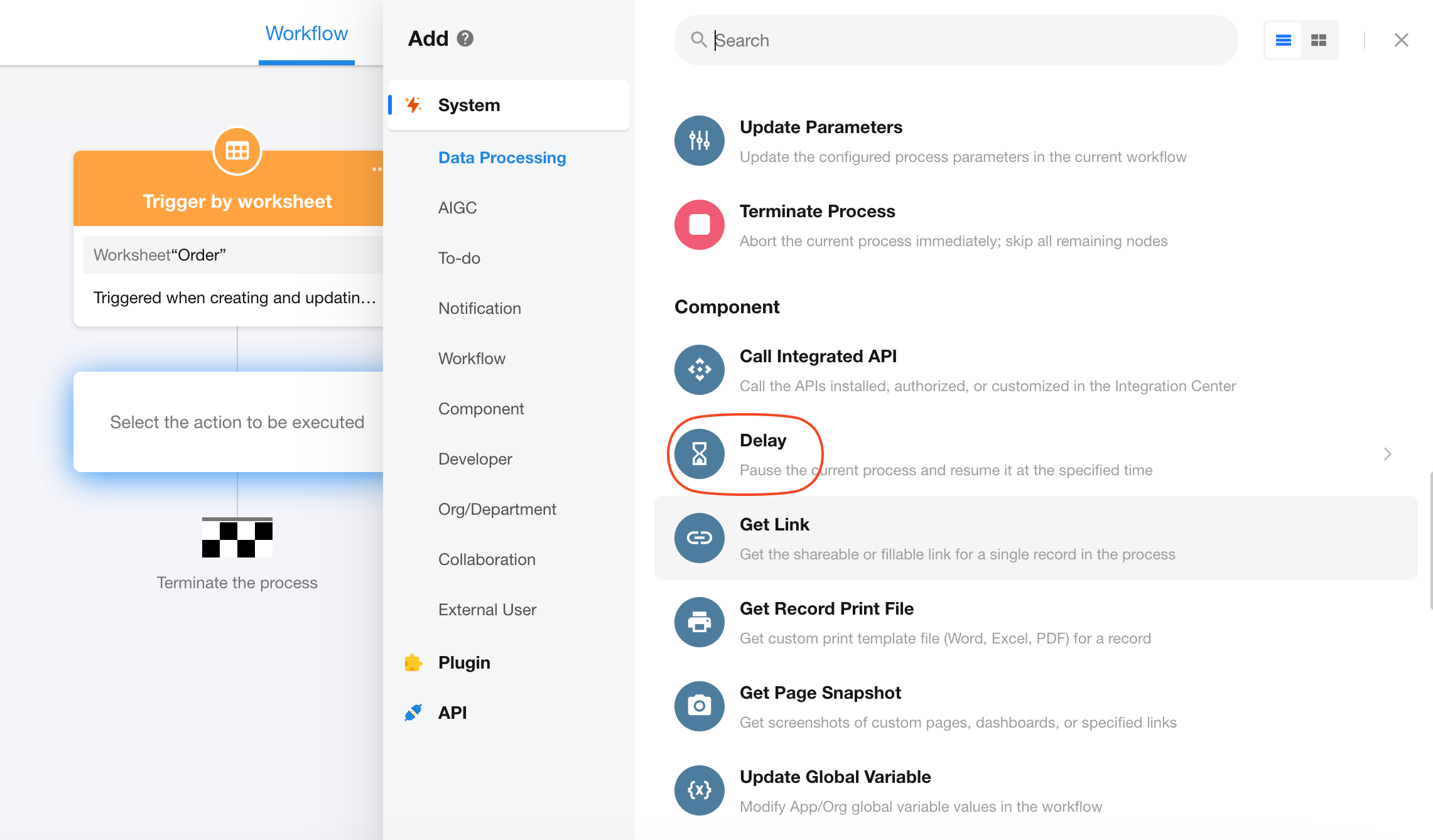
Add a Delay node and select the option to resume the workflow on a specified date.
Configure the Delay Node
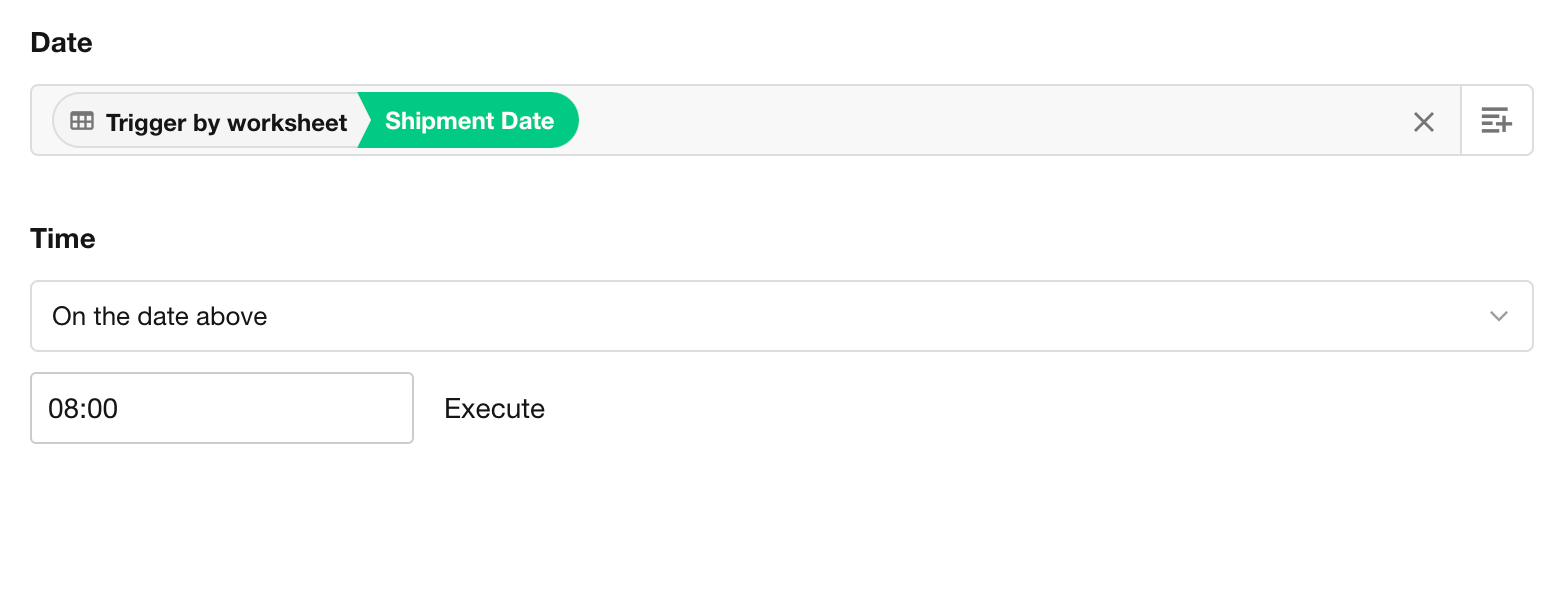
Configure when the workflow should resume:
- Date: Select the date that determines when the workflow resumes. You can specify a date manually or select a date value from a previous node. In this example, select the Shipping Date field.
- Time: Set the time when the workflow should resume.
- On the Date: Resume on the selected date.
- Before: Resume a specified number of days before the selected date.
- After: Resume a specified number of days after the selected date.
The default resume time is 8:00 AM. Click the time to change it.
If the selected field contains both a date and time, the workflow uses the time from that field, so a separate resume time does not need to be configured. You can still specify how long before or after that date and time the workflow should resume.
Example 2: Resume After a Specified Duration
Create a Workflow
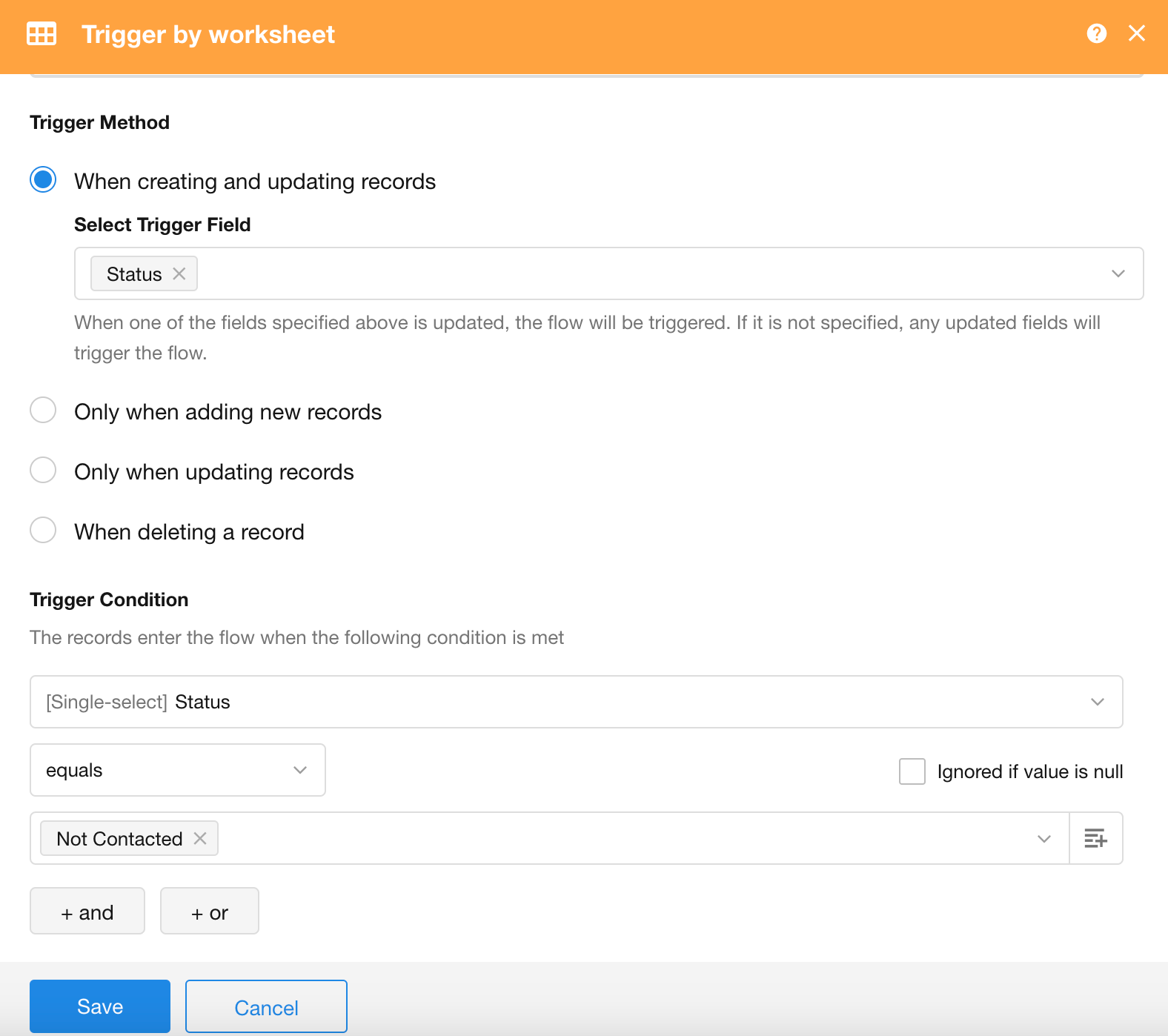
Configure the workflow to trigger when a lead's status changes to Not Contacted.
Add and Configure a Delay Node
Add a Delay node and select the option to resume the workflow after a specified duration.
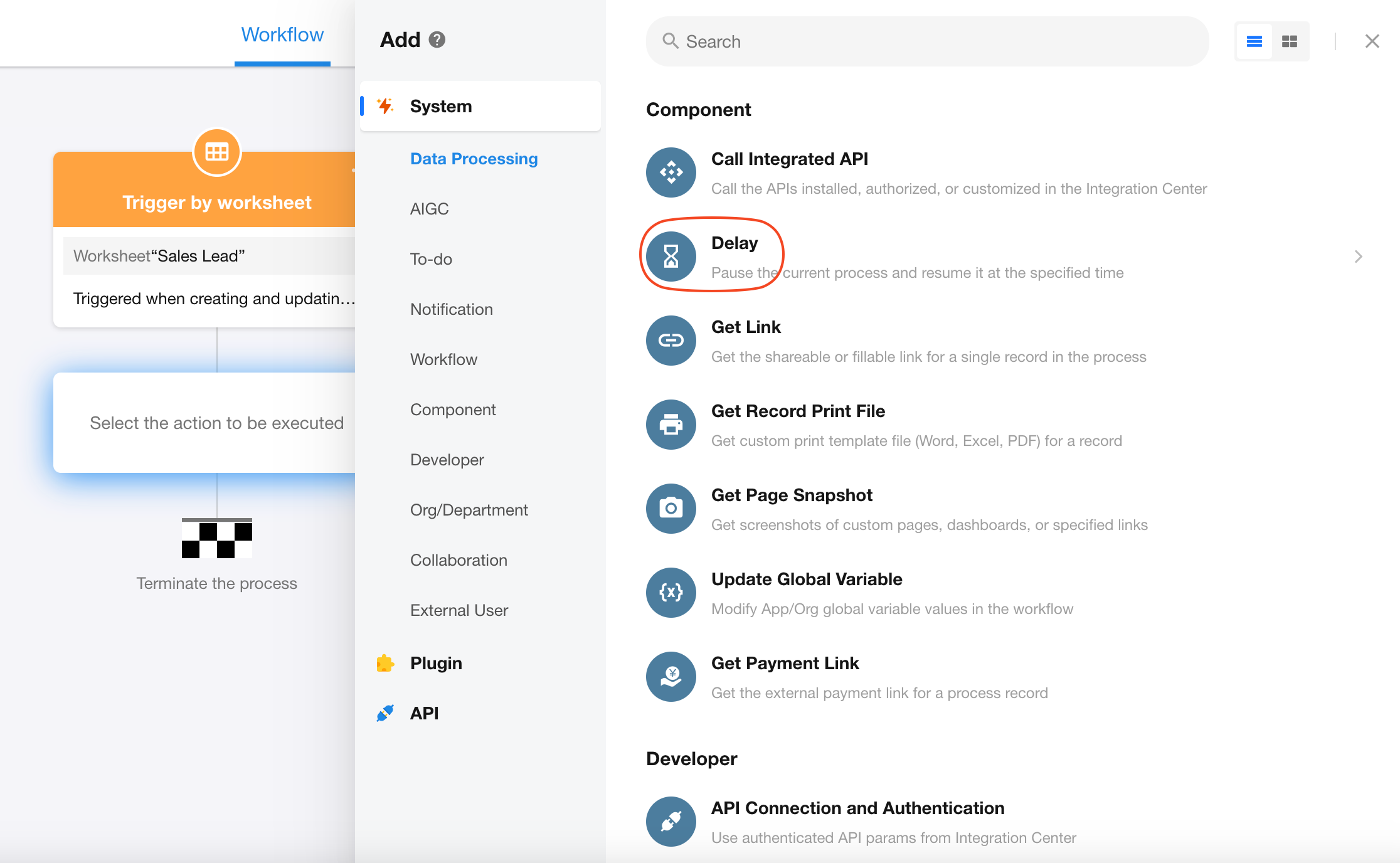
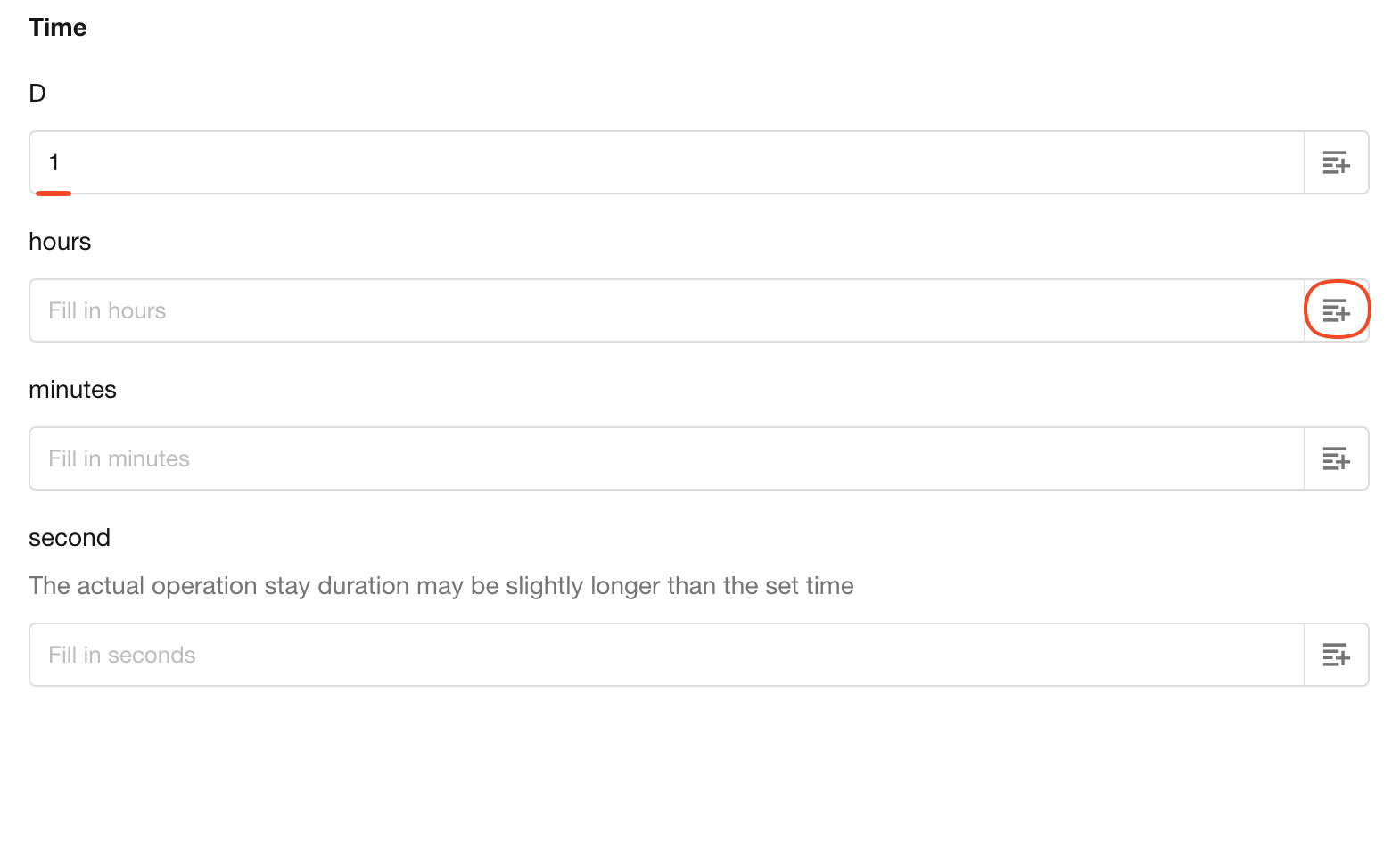
The delay duration can be entered as fixed values or obtained from record fields.
A duration can include M days, N hours, X minutes, and Y seconds, with the following limits:
- M ≤ 999
- N ≤ 23
- X ≤ 59
- Y ≤ 59
Delays can be configured with second-level precision. For example, a 5-second delay means the node is configured to resume after 5 seconds. Actual execution may occur slightly later than the configured time.
In the example below, the workflow enters Delay node B immediately after it is triggered. It remains paused for one day, then resumes and continues to node C.
Was this document helpful?